Mollie and Ernest Burkhart’s marriage
Killers of the Flower MoonMollie and Ernest Burkhart’s marriage became the concealed route through which a murder plot reached the wealth of Mollie’s family. The union placed Ernest inside the household whose deaths transferred Osage headrights toward his wife, while his uncle, William K. Hale, controlled Ernest and sought access to that fortune. The most intimate bond in the plot was also its channel of betrayal: Ernest lived with Mollie, raised children with her, and knew the truth while she searched for the killers. His confession brought the concealment to an end, but not the marriage’s damage; Mollie later divorced him and recoiled whenever his name was mentioned.
Marriage and the Inheritance Plot
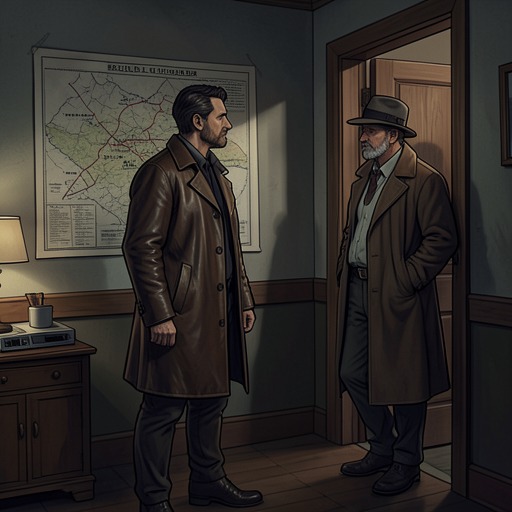
Mollie and Ernest had married four years before Anna Brown was murdered. T. B. White could not establish whether William K. Hale had intended the marriage as part of his plan from the beginning or persuaded Ernest to betray Mollie only after the marriage. That uncertainty matters: the evidence exposed the marriage as an instrument of the conspiracy, but did not settle when Ernest’s role began. In either case, the relationship gave William K. Hale a way to approach wealth he could not legally buy outright.
William K. Hale had tried to purchase Henry Roan’s headright, a share in the Osage mineral trust, despite the law prohibiting its sale. When that route remained closed, inheritance offered another way for headrights to change hands. T. B. White’s examination of probate records revealed that deaths in Mollie’s family increasingly directed headrights toward her. Because Mollie was married to Ernest, and Ernest was described in an agent’s report as entirely controlled by William K. Hale, this flow of inherited wealth connected William K. Hale to the family through his nephew. Kelsie Morrison, a bootlegger who informed for the Bureau, likewise told agents that Ernest and Bryan Burkhart did what their uncle ordered.
The order of deaths sharpened the significance of the marriage. Anna Brown, who was divorced and had no children, left nearly all her wealth to her mother, Lizzie. Lizzie’s will directed most of her headright to her surviving daughters, Mollie and Rita Smith. Rita and her husband, Bill Smith, were then killed in a bombing. Their wills provided that if they died simultaneously, much of Rita’s headright would pass to Mollie. The plan misfired in one important respect: Bill Smith survived Rita by several days, inherited much of her wealth, and, when he died, the money passed to one of his relatives. Even so, most of the family’s headrights accumulated with Mollie, whose wealth was controlled by Ernest. T. B. White later described Mollie as the first means by which William K. Hale could draw the family’s assets through the Burkharts.
Intimacy and Concealment
The arrangement required more than a legal connection. Ernest had to share a bed with Mollie and raise children with her while plotting against her family. T. B. White could trace the financial pattern and Ernest’s subordination to William K. Hale, but could not determine whether the marriage itself had been planned as part of the scheme. The book presents that unresolved question alongside the stark fact of the betrayal: whether the conspiracy preceded the wedding or took shape afterward, Ernest’s domestic life placed him beside the person whose relatives were being killed.
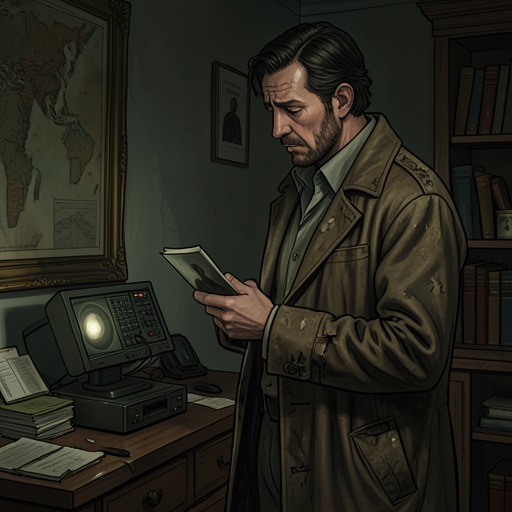
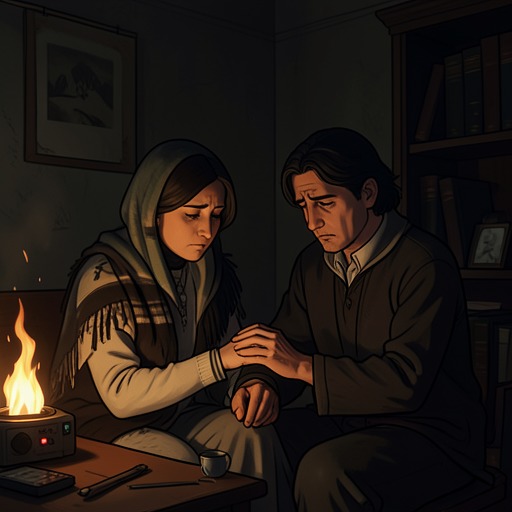
Ernest’s knowledge made his ordinary presence beside Mollie a repeated form of concealment. He was among the people at the scene where Anna Brown’s body lay, comforting Mollie even though he knew that Anna’s killers were nearby. He also knew who was responsible for the bombing of Rita and Bill Smith’s house. Later that evening he went to bed with Mollie, who was still desperately searching for the killers. These episodes make the marriage’s betrayal concrete: Ernest was not simply connected to the perpetrators through William K. Hale; he remained beside Mollie while withholding what he knew about the deaths devastating her family.
Disclosure and Confession
After Mollie became ill and was taken to a hospital in Pawhuska, where she improved under another doctor’s care, authorities questioned her. The Shoun brothers denied wrongdoing, and T. B. White could not prove who had been responsible for the poisoning. Mollie admitted that she felt scared and bewildered. At times she relied on an interpreter to help with English, which now seemed to her to carry secrets she could not comprehend. An attorney assisting the prosecution told her that Ernest had confessed to knowing something about the murder cases and that William K. Hale had apparently engineered them, including the bombing of her sister Rita’s house. When asked whether William K. Hale and Ernest were kin, Mollie confirmed that they were.
Ernest’s confession emerged during his trial. On June 7, after his daughter’s death, he was being escorted from the courtroom to the county jail when he secretly passed a note to a deputy sheriff, asking that it be delivered to prosecutor John Leahy. In the jail, Ernest was pacing, with deep circles around his eyes. He told Leahy that he was through lying and did not want to continue the trial. When Leahy said that, as a member of the prosecution, he could not advise him, Ernest replied that he could not tell his own lawyers. T. B. White later reported that Ernest was deeply disturbed, had admitted lying, and said he would tell the truth in court.
The confession did not finish the prosecution’s work. Authorities still had to pursue Bryan Burkhart, John Ramsey, William K. Hale, and other alleged participants. A Supreme Court ruling that Henry Roan had been murdered on Indian lands returned the Roan case to federal district court, strengthening the possibility of prosecuting William K. Hale there. Ernest, meanwhile, was sentenced on June 21, 1926, to life imprisonment and hard labor. A prosecutor perceived relief in his face, as though the confession had eased a burden; before being led away in irons, Ernest turned and smiled wanly at Mollie. Her expression remained impassive, perhaps even cold.
Divorce and the Meaning of the Marriage
The later evidence of Ernest’s knowledge left no basis for treating his confession as a restoration of the marriage. By the time Kelsie Morrison was convicted of Anna Brown’s murder, Mollie could no longer look at Ernest. She soon divorced him, and whenever his name was mentioned she recoiled in horror. The separation followed the discovery that her husband had comforted her at Anna’s death scene while knowing the killers’ identity, and had concealed what he knew about the bombing as Mollie sought answers.
The marriage’s narrative significance lies in the contrast between its public form and its hidden function. It appeared to be a domestic bond, but inheritance and William K. Hale’s control of Ernest turned it into an indirect channel toward the family’s wealth. The plot depended on the very closeness that made its betrayal difficult to recognize: Ernest’s place beside Mollie gave him access to the family, while his silence left her searching for explanations he already possessed. His confession exposed the truth, but the final encounter at his sentencing did not reconcile them. Mollie’s later divorce marked the relationship’s decisive ending, separating her from the man who had shared her household while helping conceal the destruction of her family.